
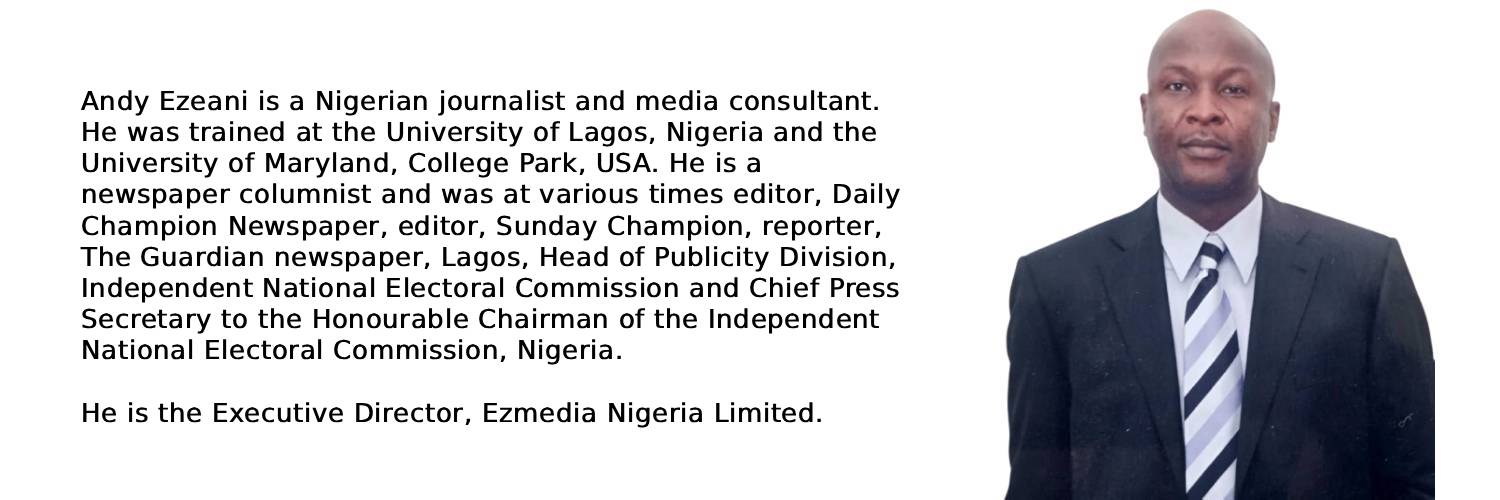
Andy Ezeani
Wednesday, March 18,2026
Millions of Nigerians felt grossly short-changed on February 18 2026, when President Bola Tinubu signed the Electoral Act 2026.
Even for a people who have come to terms with the reality that what their government gives them is often not what they want or need, the outright rejection by the Tinubu government of the people’s demands in a new electoral law was a weighty, cold statement. It spoke of the gap between the popular will and the will of the circle that wields power.
Tinubu did not only ignore the overflowing national agitation for a transparency-driven thrust for the Electoral Act, he appended his signature to the new law with alacrity. It was a type of swiftness that is hardly identified with his government in good works. He signed the Electoral Act barely 24 hours after an emergency session of the National Assembly repealed Electoral Act 2022 and re-enacted the Electoral Bill 2026.
The President was surrounded at the signing ceremony by a number of the key individuals who pulled off the ‘to hell-with-the people’ project at the National Assembly.
The process through which the National Assembly, or better still its leadership, cobbled together and railroaded what emerged as the Electoral Bill 2026 into a law, was anything but tidy. It was contemptuous of Nigerians, too.
Clearly, the majority of Nigerians – the people who the legislators supposedly represent – had wanted a different fibre in the Electoral Act 2026. The people had set the ultimate stock on transparency in the conduct of elections, to help propel democracy to a better pedestal.
For the majority of Nigerians, the 2023 general election remains a letdown in more ways than one. A new electoral law offered an opportunity to clear all ambiguities and remove all impediments that clog transparency in electoral contests.
Interestingly, the House of Representatives had passed their version of the Electoral Bill back in December 2025, totally aligning itself to the overwhelming public preference for real-time electronic transmission of election results. The leadership of the House did not have any problems with the proposals for the new electoral law then.
The leadership of the National Assembly, anchored in the Senate, had a different idea.Or had one impressed on it. Two months down the line after the House had passed its own version of the Electoral Bill, a new spirit overtook the leadership of the National Assembly.
The leadership of the House made a volt face, repudiated their earlier approved Electoral Bill, and inclined to the Senate version of the Bill that was antithetical to the popular will.
For the umpteenth time, the legislators unequivocally told Nigerians that they were not actually reckoned with in the actions and decisions of their supposed representatives.
There was nothing exactly earth-shaking about the stance and statement of the leadership of the 10th National Assembly on the Electoral Act 2026. Nigerian voters have reconciled themselves in recent years to the reality of a variant of absurd democracy in their environment in which the electorate is of little or no importance in the bearing of those who purportedly represent them.
Before Tinubu moved with lightening speed to sign the Electoral Act 2026, many Nigerians, led by Civil Society Organizations (CSO), sundry activists and politically- sensitive citizens were still agitating and nursing a faint hope that the Bill passed by the National Assembly could still be remedied before the president would sign it. After all, it was expected that the Bill from the National Assembly would be reviewed by the office of the Attorney General of the Federation before the President signed it.
It did not turn out that way.
The wait and the hope did not last long. The prompt signing of the Electoral Act 2026, in spite of the vociferous public demand for the section on real time electronic transmission of election results to be properly inserted, spoke loudly of where Tinubu stood on the matter.
There was no doubt about what the majority of Nigerians wanted in the Electoral Act. There was no doubt, on the other hand, that what the people wanted was not exactly what the President wanted. The National Assembly leadership simply stood on the side that offered it more at the moment.
It turned out soon after that there were more atrocious aspects of the Electoral Act 2026 than people had realized. Real-time transmission of election results may not have even been the main issue of concern in the document. The realization that the new Electoral Act totally expunged Section 134(1) of Electoral Act 2022, thereby removing certificate forgery and faking of academic qualification as basis for challenging a candidate’s qualification to contest an election in Nigeria, is the big one. It was a premeditated strike.
There are several questions to ask about this sordid development. How come all the Civil Society Organizations who dwelt on the Electoral Bill and walked it through the long, challenging process at the National Assembly negotiations never saw the shield thrown around criminality in the Bill? Or was the certificate dimension inserted at the point of signing and gazetting? Or even after? This, without a doubt, is a very slippery era in Nigeria’s democracy.
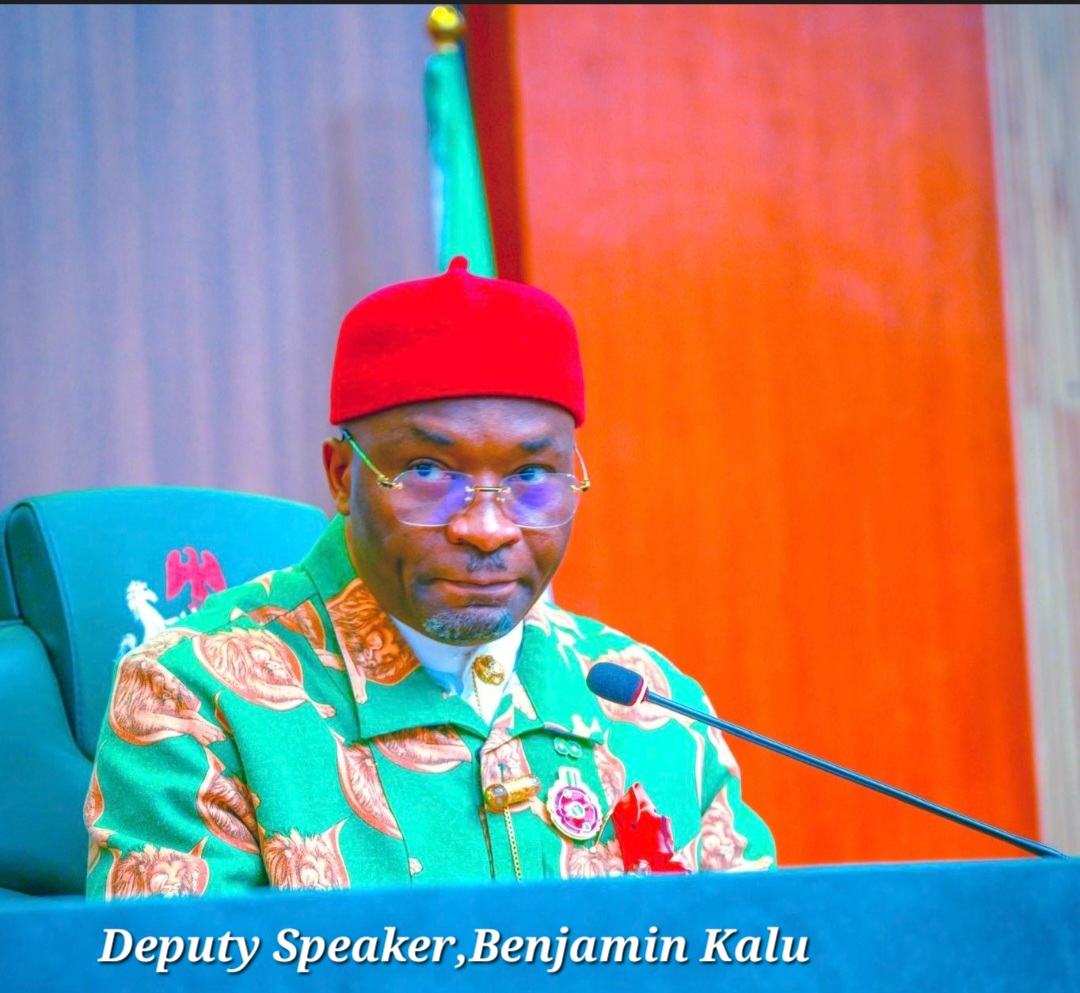
The horror of the passage and signing of Electoral Act 2026, less than one month ago has become topical once more – not that the import of the brazen assault has been fully lived down by Nigerians – because the House of Representatives was back on duty last week with a renew mockery of democracy.
While agitations were still smouldering over the Electoral Act 2026, with many innocent, or naive or genuinely patriotic citizens still wondering openly if there was anything could still be done to enhance the credibility of the new Electoral Act 2026, the House of Reps launched a fresh assault on decency.
It was not even what was done by the leadership of the House of Reps that rankled as how they did what they did.The Electoral Act 2026 Amendment Bill which was “passed” within 24 hours, did not seek to insert real-time electronic transmission of election results in the Electoral Act 2026 as Nigerians canvassed . It did not move either to restore forgery of academic qualification as an offense that would disqualify a candidate from qualifying to contest an election.
The latest kangaroo law making exercise was concerned with further constricting the political space. Its primary purpose was to prescribe a strict penalty for dual membership of political parties. The penalty for the belonging to more than one party, not surprisingly, included disqualification from contesting an election as well as a jail term.
It was for addressing this issue of dual membership in political parties that the amendment to the new electoral law was initiated at the House of Representatives. For the legislators or whosoever is prodding them, dual membership of political parties is a much more serious matter than certificate forgery or submitting fake certificate to contest an election.
How the deliberations on the proposed amendment to the new electoral law were carried out on the floor of the House of Representatives will go down in history as one of the most depressing and reprehensible acts of sabotage against parliamentary proceedings. The desperation was beyond comprehension.
Shutting out any and all contributions on a matter called up for deliberations at a parliament and simply knocking the gavel to declare a Bill passed was a new low in parliamentary democracy.
As it appears, the last has not been heard about the Electoral Act 2026. The Act appears to be designed to be a trap for all those targeted to fall into it. At any point a new idea comes up on new possibilities that could shut out the targeted competitors, the Reps will likely return to pass new amendments. These will wait to be inserted to the new law at an opportune juncture.
The video on the farcical session where the amendment bill to Electoral Act 2026 was “passed” at the National Assembly went viral soon after the session. Very saddening. What a democracy! What a charade!
