
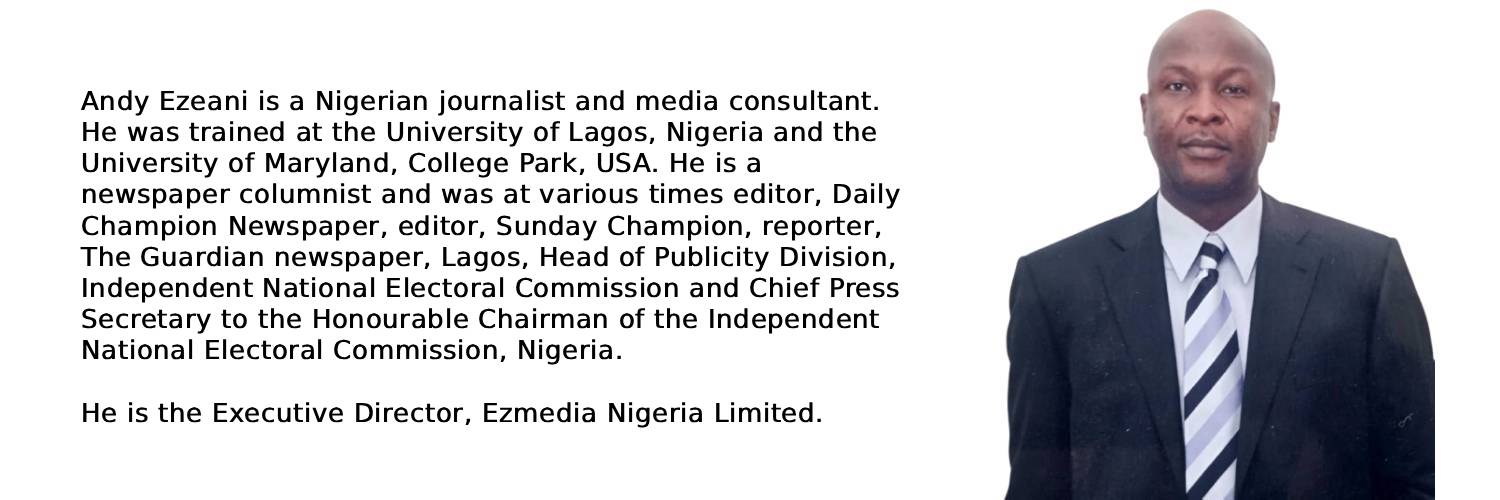
Andy Ezeani
Tuesday,January 6,2026
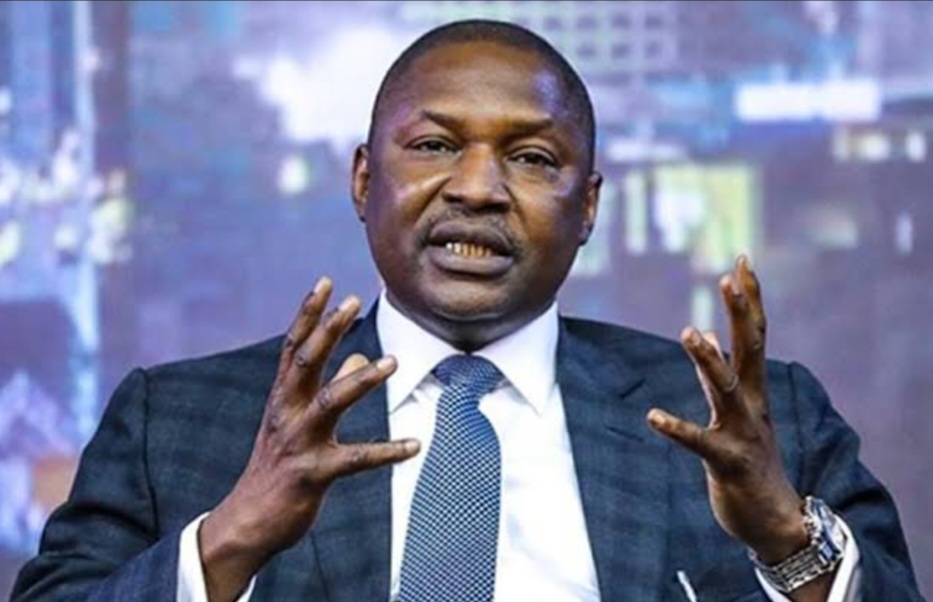
On Wednesday, January 7, 2026, the Federal High Court in Maitama, Abuja, will decide whether Abubakar Malami, Senior Advocate of Nigeria and former Minister of Justice/Attorney General of the Federation, deserve bail.
Malami was arraigned by the Economic and Financial Crimes Commission (EFCC) at the Federal High Court on December 30,2025, alongside his wife, Hajia Bashir Asabe and son, Abubakar Abdulaziz.
The charges against Malami and his family bother on money laundering to the tune of N8.7 billion. EFCC had earlier said that it traced property and investments worth over N200 billion to the former Justice Minister.
The root of Malami’s problems can be located in his eight years in government between 2015 and 2023, when he served in the Muhammadu Buhari government as Attorney General and Justice Minister.
The nexus between Malami’s time in office and his stupendous wealth, as derailed by the EFCC, is of obvious interest to the anti-graft agency.
A sermon on the vicissitudes of life can hardly be more eloquent than Malami’s present travails offer. Indeed, there are multiple interesting angles of his case.
For the eight years he held sway as Minister of Justice, Malami had tremendous leverage over the country’s judicial system. Any court that countered the disposition of the Attorney General surely did so at its own peril.
As Minister of Justice, Malami was not known to always comply with the rulings of the courts. Some he ignored, others he devised means to circumvent.
The government he served was actually notorious for barely tolerating the judiciary. It can be said of Malami that his offense was not only that he sinned, but that he got his principal, Buhari, to also sin.
It may not be easy to establish exactly who led who astray between the Justice Minister and his principal, considering especially that Buhari was never a friend of the law. But then, Malami was the Minister of Justice and adviser to the president on judicial and legal matters.
Over at the EFCC, Malami, as Minister of Justice, robustly impressed it on public consciousness that he had supervisory authority over the agency.
No other Attorney General so openly asserted his control over the EFCC as Malami did. He eventually dislodged the Ibrahim Magu leadership of the agency and installed Abdulrasheed Bawa, the one after his heart.
Three years out of office as Minister of Justice and supervisor of the EFCC, Malami is standing trial before a court in Abuja, arraigned by the EFCC. Isn’t life hopeless?
Abubakar Malami has received scant sympathy from the public, not because of the magnitude of his misdeed as articulated by the EFCC, but simply because many believe that there is nothing wrong in a man tasting the broth he prepared.
Indeed, not a few human rights activists and civil society organisations have said as much.
If, as Minister of Justice he presided over injustice to many and saw nothing wrong in people who were set free by the court still being detained thereafter, then there can be no complaints about his being remanded at Kuje Prison for just one week.
Could his lot have been better in his present circumstances if he had accorded humanity and justice more respect in his previous public assignment? Definitely.
For all the stark lessons of life poignantly presented by Abubakar Malami’s travails of the moment, there are aspects of his prosecution that many find uncomfortable. The concern is beyond Malami or whatever he represents.
Twenty-three years after it was established as an anti-corruption agency, with six different chief executives of varied hues and temperament over those years, the EFCC has not succeeded in convincing majority of Nigerians that it is not just an instrument in the hand of the executive.
Even as corruption in prime public positions remains rife, thereby justifying the essence and mandate of the anti-graft agency, the predominant perception of the EFCC before Nigerians is still that of a cudgel wielded by the executive branch, through its appointed agents, to undo anyone marked out to be done in, usually for political purposes.
The optics and circumstances of a number of cases being prosecuted by the EFCC hardly help to douse attendant cynicism. Take Abubakar Malami’s case for instance. The charges of gross abuse of office against him appear quite weighty. It is up to the court to determine his guilt or otherwise.
Somehow, however, Malami’s travails coincided with his exit from the All Progressives Congress (APC) and his conspicuous declaration for the African Democratic Congress (ADC), the consolidating nightmare of the APC.
Malami had reportedly expressed interest in running for the office of governor of Kebbi State on the platform of the ADC.
At a juncture governors and prominent politicians are being zealously corralled into the APC, with a view to obliterate opposition in Nigeria’s peculiar democracy, anyone heading the opposite direction cannot be a friend of the government. Maybe EFCC on Malami at this point is a coincidence.
Of course, joining an opposition party should not shield anyone from being investigated and prosecuted where cogent ground exists for the anti-graft agency to act against violation of the law.
By the same token, being in the fold of the ruling party should equally not exempt anyone from answering to charges of corruption. Unfortunately, the public does not often get the impression that the EFCC is even-handed.
In fact, the perception is that the EFCC is soft on glaring suspects in corruption allegations from the ruling party. That perception makes the agency’s robust prosecution of corruption cases against persons on the opposition side appear like persecution.
Public statements by the EFCC defending itself are of little value in changing public perception. What counts is what the agency does.
In any case, Adams Oshiomhole’s doctrine that any politician with a burden (of corruption charge) who joins the ruling APC will have his sins forgiven is still ringing out in the ears of Nigerians. EFCC will contend with this backdrop as long as APC reigns.
Matters are not helped, unfortunately, by such incidents as the recent nomination by the government, of individuals with live EFCC cases, for prime political positions, which nominations anti-graft agencies, including EFCC, gave clearance.
Barely three years ago, Abubakar Malami was short of walking on the water. Kuje Prison must have seemed on another planet then. Not anymore.
If he is given to introspection, he would spare a thought now for the times he treated the liberty of other citizens with haughty scorn. His travails may be for a short time, but the lesson is eternal. Let those who have ears hear.
