
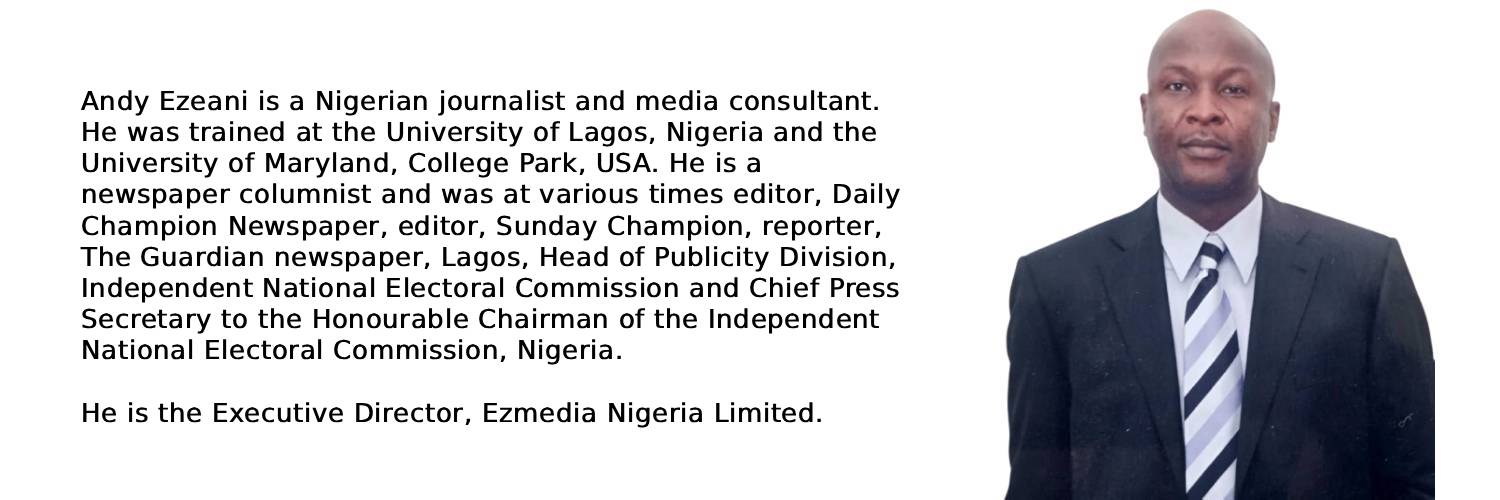
Andy Ezeani
Tuesday,August 18 2026
In early 2010, Anambra State was at the threshold of a governorship election slated for February 6th. Peoples Democratic Party (PDP) was Nigeria’s dominant political party then, and Charles Chukwuma Soludo was the PDP governorship candidate for the election.
Peter Obi was the incumbent governor of the state and the candidate of the All-Progressives Grand Alliance (APGA). The line-up on the ballot was star-studded. Other notable candidates included Dr. Chris Ngige of the Action Congress (AC) and Emmanuel Nnamdi (Andy) Uba of the Labour Party (LP), etc.
On the eve of the election, the ‘federal might’ swooped on Awka, the Anambra State capital. Governors of the PDP and other prominent politicians from the ruling party came to town to throw their weight about and possibly to impress it on Anambra voters to align their state with the centre, as the expression goes. The tension was palpable.
Chairman of the Independent National Electoral Commission, Professor Maurice Iwu, reached out to the Police High Command and requested that the invading politicians be reined in. He wanted them to be stopped from generating tension and possibly impeding a smooth election in the state.
The leadership of the Police obliged him.
Although PDP was the ruling party, the Police granted the request of the electoral commission and so restricted the governors and the other visiting top politicians to their hotels until the election was over. After all, they were not eligible to vote in the state.
Many years later, during the campaign for the 2023 presidential election, Nasir El-Rufai, then governor of Kaduna State and a chieftain of the ruling All Progressives Congress (APC) counted the 2010 incident against Peter Obi. He recalled that in 2010, Obi as governor of Anambra state arrested him and some other prominent politicians who visited the State for a campaign and restricted their movement. That was not correct. Obi neither arrested nor restricted anybody’s movement during the election in reference. It was the INEC Chairman who asked the Police to prevent the invading PDP might from generating undue heat in an election they were not a part of.
Political behaviour rarely changes in Nigeria, not for the better. Last Saturday, August 15,2026, Osun State had a governorship election. The federal might from Abuja and all over, this time wielded by the APC, landed on the state. The chaos was huge.
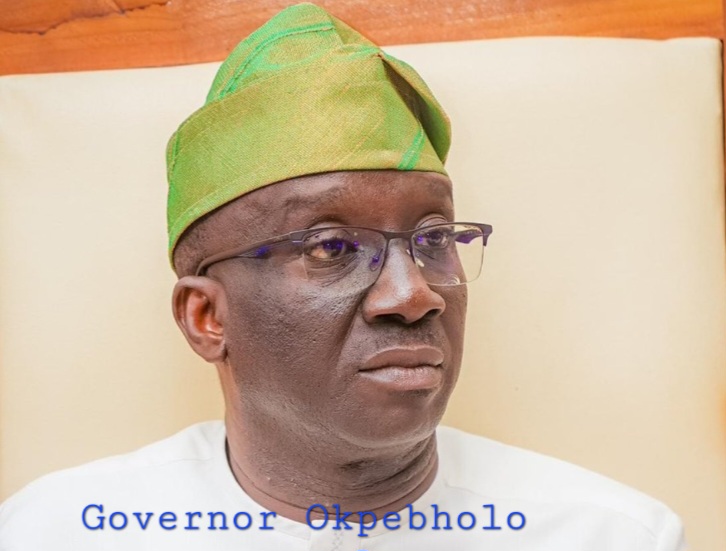
The state governor, Ademola Adeleke, seeking a second term in the election, found himself literally marooned in his own hearth. It was neither a laughing matter nor a dancing one.
The governor did not have any troops to command. Nor did he have a posse of swashbuckling power-exuding party chieftains on his side. His Accord party, a specific-purpose vehicle engaged to take him through the election, did not parade any worthwhile political dynamo backing him. He was on his own, unlike his main opponent from the APC, who was being supported by the bearers of power from Abuja and the APC state governors.
To make matters grimmer, the invading APC governors were manifestly fortified both with formal security and by impudent independently-procured rruffians.GgovernorAdeleke was at home quite alright, but he could only holler.
Interestingly, the governor, like all other governors across the country, gets adorned at convenient instances, with the garb of the chief security officer of the state. As the situation in Osun State showed during the just-concluded governorship election, the governors are not chief security officers in their states.
In the weeks leading to the election, Governor Adeleke was no chief security officer of Osun state. Indeed, he was at the receiving end of the activities of the security agencies. Some of them left little doubts about where their allegiance was. And it was not exactly with the governor.
Whatever the activities or the allegiance of the security agencies were in Osun state through the election period, at least they had a statutory duty to perform. And they did it relatively well.
It speaks volumes about Nigeria’s democracy, though, that 27 years after electoral democracy was restored therein, a governorship election in a state, featuring 1,906,390 eligible voters, would necessitate deploying 30 Commissioners of Police and over 15,000 policemen from across the country.
In addition to the police contingent, various other security agencies also deployed for the election.Among these were the Department of State Services (DSS), National Security and Civil Defence Corps (NSCDC), Immigration Service, Nigeria Correctional Service and the Federal Road Safety Corps (FRSC), as well as the Nigeria Armed Forces.
It can not be confirmed here that the Customs and Fire Service were not on the ground in Osun, too. In all, over 40,000 booths of various sizes and types amassed in the state for the democratic election of a governor.
In the context of a democratic activity, many would view the amassing of such an overwhelming number of servicemen in a state for a governorship election as suffocating.
The number of servicemen deployed for the election was not as objectionable however, as the aggro visited on Osogbo and indeed, Osun state by APC state governors and other top politicians of the party, in the most sensitive hours around the election.Top party officials of the ruling party, or for that matter, any other political party, coming along to campaign for their party’s candidate in a crucial election can easily be understood.
When however, no less than ten state governors, and prominent legislators, as a part of an intimidating arsenal of federal might, storm a state capital on the eve of a tense election, bringing along thugs who, glaringly under influence, brazenly threaten the peace of the election, then “Their Excellencies”, as the governors are wont to be addressed, have descended to a pedestal far lower than can be associated with excellence. They had become a menace.
Viral social media videos showed unsettling clips of imported thugs strutting the streets of Oshogbo, proclaiming their readiness to kill and maim anyone who would dare to stand on their way in achieving the goal of “kicking out” the incumbent governor. That apparently was the objective for which their hirers procured them. As it appeared, none of the numerous security agencies saw the offensive video clips.
It was exactly to forestall such aggravation that the INEC leadership in 2010 restricted the peddlers of the federal might to their hotels on the eve of a similar election. Maybe the electoral law should find a way to prevent top politicians from coming into any state they are not eligible to vote, say 24 hours before an election.
As the Osun governorship election showed, the high-profile peddlers of federal might add no value to any candidate’s electoral fortune in the long run. All they seem to have aplenty is high nuisance value and distraction to the conduct of elections. They should be stopped.
